
Murano swirl lamp: The history behind the iconic pattern

If there's one pattern that defines Murano glass in Danish interiors, it's the swirl — the distinctive, spiraling bands of colored glass that wind through the lamp's body. It's Vetro's signature design, and it has a history stretching back several hundred years in the Venetian glass workshops.
Filigrana: The technique behind the swirl
The swirl pattern is based on an age-old Murano technique called filigrana (or "a fili" — "with threads"). The technique was developed on the Murano island in the 16th century and is one of the most demanding glassblowing methods in existence.
The process starts with the glassblower pulling thin rods of colored glass — called "canne" — and laying them side by side in a mold. Over this layer the glassblower gathers a blob of clear, molten glass from the furnace. As they turn and blow the glass, the colored rods stretch out and wrap around the form in the spiraling pattern we know as the swirl.
It requires precise control of temperature, rotation and breath to keep the threads even and the pattern harmonious. Too much rotation and the threads fuse together. Too little, and the pattern becomes irregular. It is a balancing act that is only mastered after many years of practice.
Origins of the colors
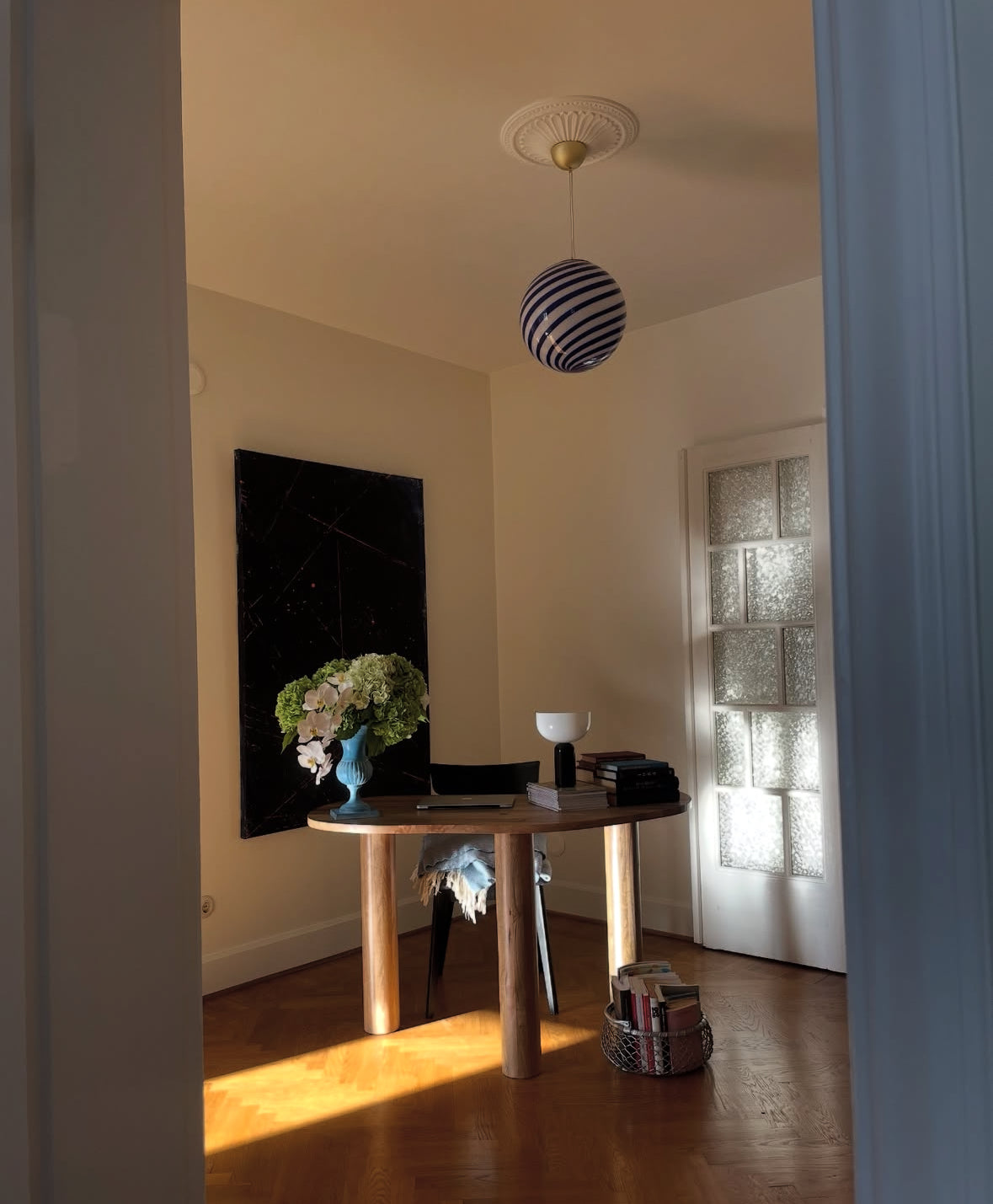
The vivid colors in Murano swirl glass do not come from paint or surface coatings — they are integrated into the glass itself. Glassblowers add minerals and metal oxides to the molten glass to create specific colors:
- Cobalt: Gives the deep, rich blue color
- Copper: Creates shades of green and turquoise
- Manganese: Produces violet and purple tones
- Gold: Yes, real gold — added in microscopic amounts it gives the warm ruby-red color
- Tin and arsenic: Historically used to create the white, opaque glass ("lattimo") that serves as a background for colored stripes
- Iron: Produces greenish and brownish tones depending on concentration
Each glassmaster has their own recipes and secrets for exact color nuances — recipes often passed down through generations. As a result, the same color can appear subtly different from one workshop to another.
The 1960s and 1970s: the golden age of the swirl lamp
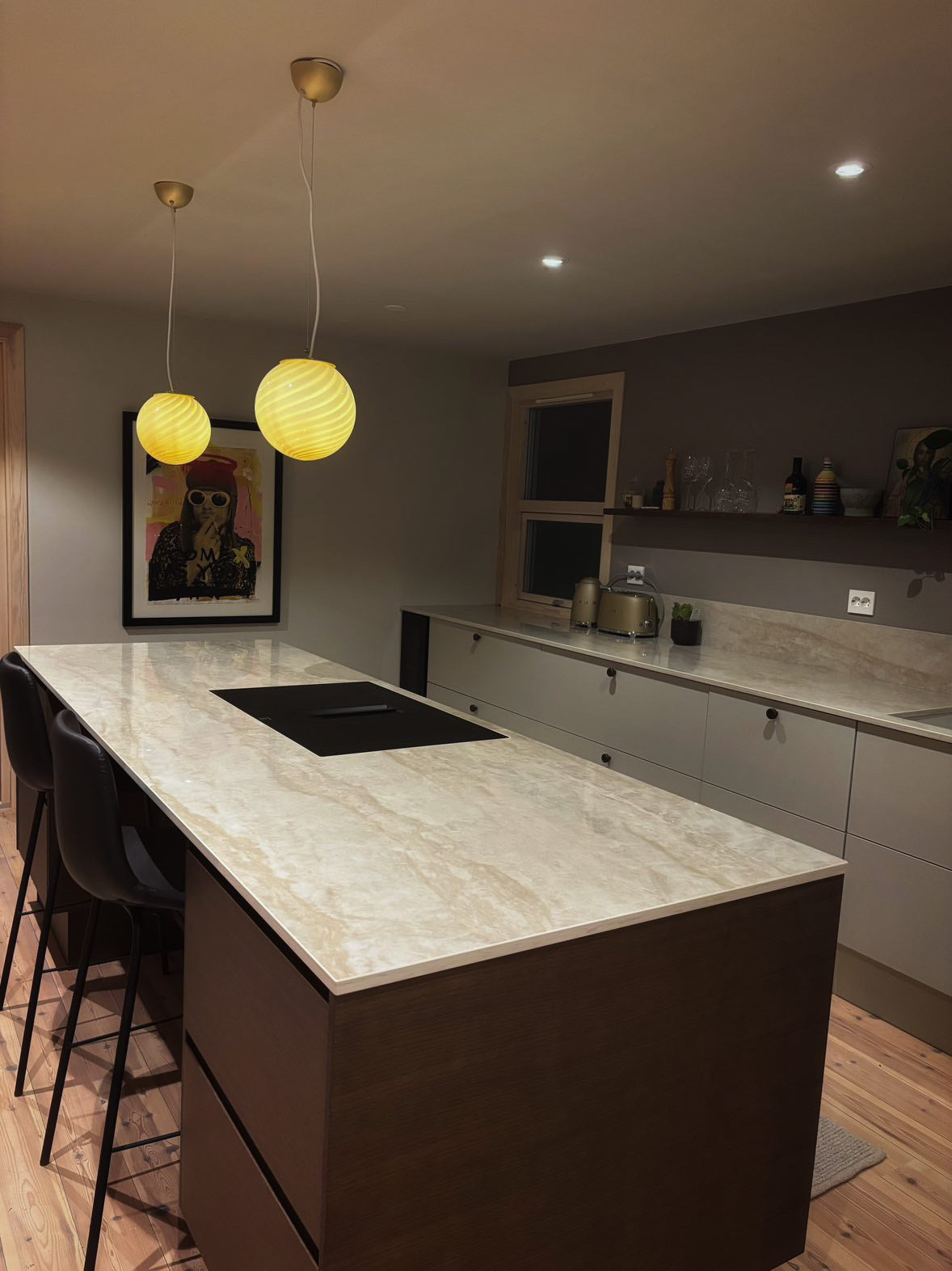
Although the filigrana technique is several centuries old, it was in the 1960s and 1970s that Murano glassblowers really began to use it in lamp production. That era was characterized by an experimental, playful approach to design, with Murano workshops collaborating with Italian designers to create new forms.
The characteristic round pendants and table lamps with colored swirl patterns quickly became popular in Italian and later European homes. It was a time when color and material mattered more than minimalism — and where craftsmanship was a natural part of everyday objects.
Many of the original designs from this period are still in production today because they have proven to be timeless. Read more about the 700-year history of Murano glass.
Why no two swirl lamps are the same
It's one of the things that makes swirl lamps so special: no two are identical. Even when a glassblower makes the "same" lamp twice, there will always be differences in how the threads wind, how closely the bands sit, and how the colors blend at the edges.
These variations are not flaws — they are the glassblower's personal signature in each piece. That's what sets hand-blown Murano glass apart from mass-produced copies, where the pattern is uniform and predictable. Read more about how to recognize genuine Murano glass.
Candy Swirl: Vetro's interpretation

Our Candy Swirl collection is Vetro's own take on the classic filigrana tradition. The name "Candy" refers to the playful, candy-like color combinations — pink and white, green and clear, amber and honey — that give the lamps their distinctive, cheerful character.
All Candy Swirl lamps are mouth-blown by master glassmakers on the Murano island using the same techniques that have been employed for centuries. The result is lamps that combine the best of an old tradition with a modern Scandinavian aesthetic.
Explore the entire Candy Swirl collection, or read more about the signature design of the Candy lamps. See swirl lamps in context: as a dining table lamp, bedside lamp or kitchen lamp.


