
Make Murano a memorable destination
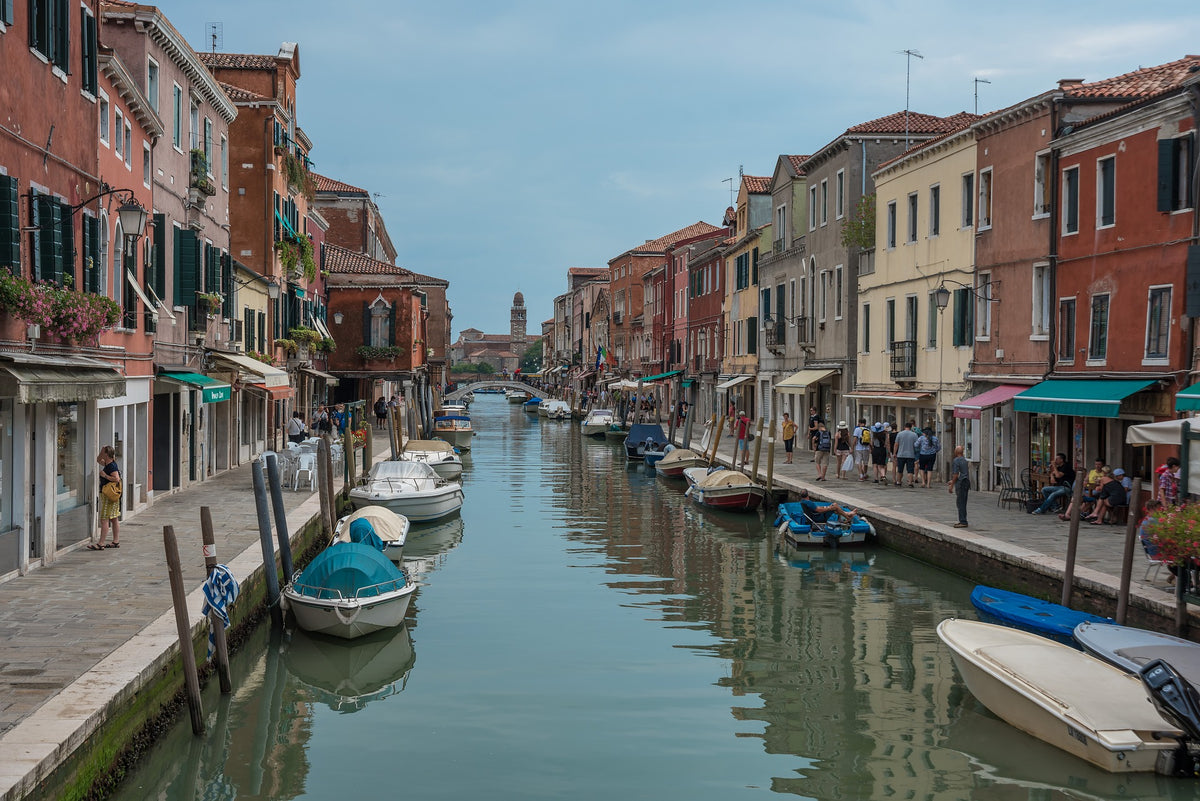
Travel to Murano in Italy and experience the colorful glass up close from the street Fondamenta dei Vetrai, which runs along the canal, or at the Museo del Vetro, which houses a huge collection of Murano glass. An absolute must-see if you are interested in glass art.

Take a day trip to the glass island in the Venetian lagoon
If you're interested in seeing how glassblowers still work today with the historic craft and watching how glass art is created in authentic surroundings, Murano is an absolute destination. You don't need to plan your trip to Murano — on the contrary. It takes no more than 20 minutes to take the public waterbus from Venice to Murano. The island is far less crowded than Venice and, for that very reason, has a completely different calm. About 5,000 people live on the small island, almost all more or less related to the island's renowned glassblowers, which include names like Alfredo Barbini, Archimede & Livio Seguso as well as Barovier & Toso and many more. The list of glass artists who have made a name for themselves worldwide is long.
Murano, the island where history and renowned craftsmanship come together
It was in Venice that glassblowers first established themselves, but as demand grew so did the workload and the risk of fire. Working with glass was therefore banned, and a prohibition on such work was imposed in Venice. Instead the glassblowers moved to Murano, where the island still breathes glassblowers and colorful glass art. You therefore won't have to look long to find somewhere to watch glassblowers over their shoulders, and you'll likely find small workshops with only a few employees, who are most often family. When you find a workshop, you'll probably notice that men tend to stand at the furnace while women assist and help customers alongside. That's how it has always been, and that's still the case today. Don't take it personally if you're asked to come back at an agreed time. After all, working with glass is a hard and demanding process, and it's a craft the glassblowers on Murano guard closely. Their glassmaking can include secret methods passed down through generations that they are reluctant to show — and we must respect that. On the other hand, you can find a workshop to participate in if you are very dedicated, or you can easily find your way to the Museo del Vetro, where the greatest glass artists are exhibited. The museum has an exceptional collection of glass art produced on Murano by the largest and most acclaimed glass artists through the ages. Do yourself the favor of visiting the museum, as it gives you insight into the glass techniques that characterize each artist and a complete experience of the craft you came to see. Beautiful chandeliers, with handmade prisms and carefully hand-formed finishes on each arm, adorn the museum's ceilings. They remind you how skilled the glassblowers of Murano were then and still are today. This is a craft that still exists for good reason — there is no reason to change traditions when they work.
Murano is unrivaled quality and unique design
In Murano's streets you'll find shops with glass in every variation you can imagine. You will find everything from jewelry, like earrings and glass beads used as pendants on bracelets, to vases and glass figures such as clowns, and yes, the whole animal kingdom shaped in glass. There are almost no limits to what you can find. Maybe you just want to take the experience home, and fortunately it costs nothing to watch from the street. If you're thinking of bringing a small souvenir home, you can easily spend a lot on small glass figures and other glass ornaments for the home. Remember that what you find on the island is newly produced. As you move around the island, you'll quickly notice that everything you approach reminds you that Murano is centered around glass art. Close to the canal Fondamenta dei Vetra you'll find the former church Santa Chiara Murano. Today the church is a permanent showroom where newer glass art is displayed for tourists, and it is possible to see how glass art is made in their workshop inside the church for a fee.
Also read 3 tips to recognize Murano glass
Take Murano home — see our collection of Murano lamps and Murano vases. Read about the history of Murano glass or the most acclaimed glassblowers.


