
3 Tips to Recognize Murano Glass
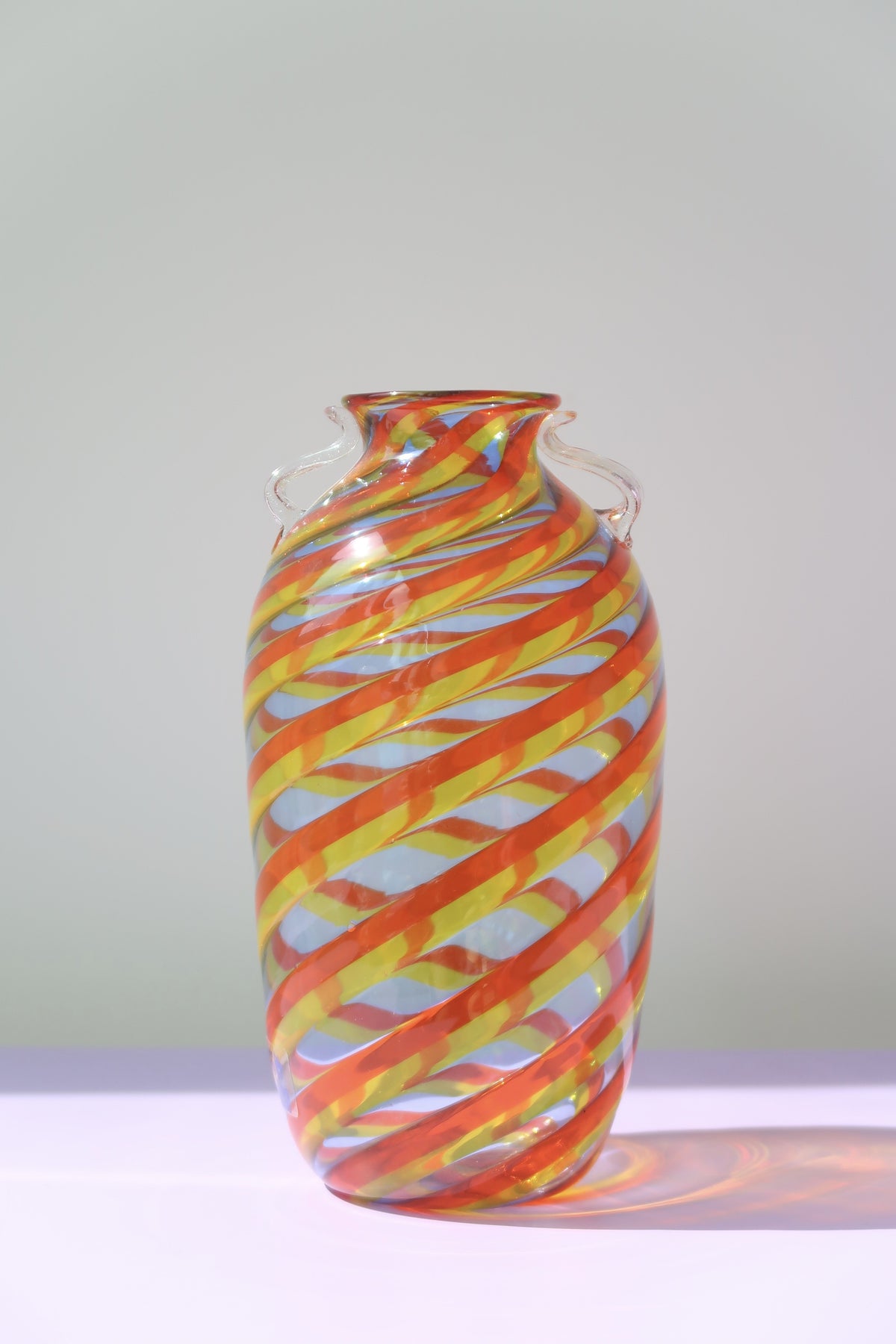
How do you recognize original Murano lamps, vases and bowls? Here we give you 3 tips on how to tell whether the glass is authentic Murano glass or not.
1. Look for the glassblower's signature and the name on Murano glass
Start by looking for a signature from the glassblower. The easiest way to verify whether you have found Murano glass is to look for a label. It is the manufacturer's verification and signature that you are holding Murano glass. It may say Vetri Murano, Venice Glass or something else. You can easily locate the manufacturer's location to see whether the glass was produced on Murano or in Venice. It is not Murano glass if it was produced elsewhere. In that case it may instead be glass made using the same technique. Vintage Murano lamps, vases and bowls can be hard to find with a label, and fortunately that is not the only way to verify the glass, but it is a good starting point.

2. Colorful Murano glass and beautiful patterns
Murano glass is known worldwide for being colorful and for having gilded details in the glass. If you go to Murano and Venice, you will see colorful glass in blue, green, red, orange and combinations of these colors displayed in shop windows. It is eye-catching glass art and one of the most obvious characteristics. It can be a Sommerso vase, where the technique is to assemble two or more layers of glass in contrasting colors without the colored glass touching each other. There must be clear glass separating the colored layers. Millefiori is another technique where the pattern, as the name suggests in Italian, resembles small mosaic flowers and often appears in a wealth of strong colors.

Vintage Murano glass bowl with gold
3. You won't find two identical Murano pieces of glass
No Murano glass is identical, remember that. If you are in a shop that sells Murano glass, you can easily hold two similar vases up against each other and compare them. Factory-made vases can be produced identical without deviating from each other and be identical down to the smallest detail, but then it is not the genuine article. The opposite is true with Murano glass. Murano glass vases, lamps and bowls resemble each other and no more than that. They are handmade, so there will naturally be variations in either shape, color and pattern. It can be difficult to judge if you don't have it in your hands but found it online. Then you must look for other signs — preferably the quirky features that show the glass is handmade.

We hope you are now better equipped to hunt for the lamp, vase or bowl with murano glass that you dream of. Even better that you also find it. Enjoy.
You can also read about the iconic Murano mushroom table lamp right here
Explore genuine Murano glass in our collection of Murano lamps and Murano vases and bowls. Read our complete guide to Murano glass or about the most recognized glassblowers on Murano.


